Advancing Human Rights Accountability

Advancing Global Human Rights Accountability Through Research, Collaboration, and Action

A University of Oxford initiative working with global partners to promote truth, justice, and long-term accountability.

About us

Bridging Academia and Advocacy to Advance Justice and Human Rights

Advancing Human Rights Accountability (AHRA) refers to a set of projects based in the University of Oxford, that work alongside international partners to strengthen access to truth, justice, reparations, and non-recurrence for victims of human rights violations.

Our projects

Advancing Justice Across Contexts and Continents

From enforced disappearances to democratic threats, our projects unite global partners to confront complex human rights challenges with research and local collaboration.
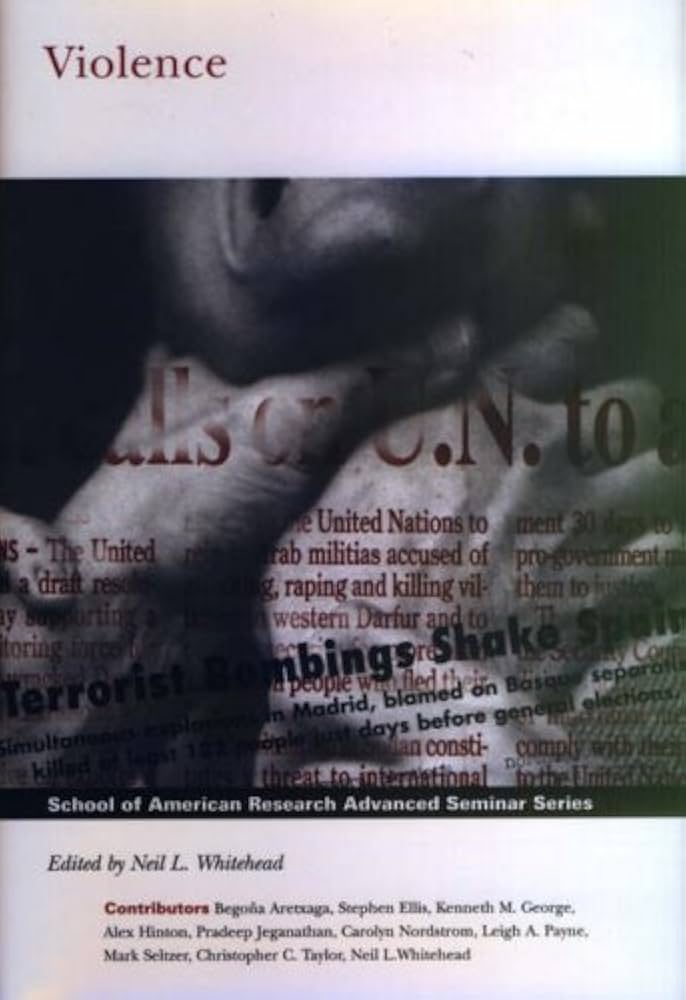
Confessions to Violence

Exploring Perpetrators’ Confessions to Violence and Sexual Crimes in Post-Conflict Contexts

This project examines three key dimensions of confessional practices after conflict—state violence, revolutionary violence, and sexual violence—to understand how truth-telling can challenge silence, reshape accountability, and advance transitional justice.
Corporate Accountability in Transitional Justice

Holding Economic Actors Accountable for Past Abuses

This project explores how business actors have been held accountable for their roles in authoritarian regimes and armed conflicts. Through data-driven research, strategic litigation support, and international collaboration, CATJ bridges the gap between academic inquiry and real-world justice efforts—centering victims’ rights in transitional justice processes around the world.
Overcoming Impunity in Post-Transition Disappearances

Addressing the Persistence of Disappearances Beyond Dictatorships

OID works with academic institutions and grassroots groups in Mexico and Brazil to spotlight enforced disappearances that continue even after democratic transitions. By analyzing patterns of perpetration and impunity, the project supports victims’ demands for truth, justice, and structural change in post-authoritarian societies.
The Right Against Rights

Understanding the Rise of Anti-Rights Movements in Latin America

RagR explores the growth of right-wing movements that challenge democratic norms and threaten human rights in the region. With an interdisciplinary lens, the project investigates the ideologies and dynamics behind these trends to inform strategies for protecting democratic resilience and civil liberties.
Transitional Justice Research Collaborative

A Global Dataset on Transitional Justice Across Countries and Democracies

TJRC compiled one of the most comprehensive datasets on transitional justice mechanisms worldwide, covering 109 democratic transitions across 86 countries (1970–2012). Built by leading researchers from the University of Oxford, the University of Minnesota, and Harvard University, the dataset includes information on human rights prosecutions, truth commissions, and amnesties, with more public data coming soon—including new coverage of prosecutions, vetting, and reparations.

Publications

Research, Insights, and Tools for Advancing Human Rights and Accountability

We publish research, case studies, and policy insights that support global efforts to strengthen human rights accountability. Our work amplifies the voices of victims, informs practitioners, and contributes to ongoing debates in transitional justice and democratic resilience.
The Right Against Rights
Right-Wing Movements (Latin America)
Confessions to Violence
Perpetrators’ Confessions. Truth, Reconciliation, and Justice in Argentina
Truth-telling has become a widespread practice in settling accounts with past repressive regimes in Latin America. It has also assumed a variety of forms: from government-mandated truth commissions, to non-governmental-organization-sponsored historical memory projects, to individual testimonials. This chapter discusses the potential value of perpetrators’ confessions to truth and reconciliation in countries emerging from authoritarian rule.
Confessions to Violence
Collaborators and the Politics of Memory in Chile
Collaborators –individuals who “cooperate traitorously with an enemy”– are an understudied phenomenon of the recent authoritarian regimes of Latin America. It is not that they were irrelevant: they supplied crucial information to the repressive apparatus and assisted in the kidnapping, torture, and murder of so-called subversives. This article examines four Chilean collaborators’ confessions and the role they played in the politics of memory in Chile.
The Right Against Rights
This chapter examines Chilean right-wing movements that undermine rights and democracy, using framejacking, violence, and social media, and stresses addressing their root causes.
Confessions to Violence
In Search of Remorse: Confessions by Perpetrators of Past State Violence
The paper focuses on the relationship between public confessions by perpetrators of past state authoritarian violence, and reconciliation. This connection functions theoretically: perpetrators of violence admit to what they did and apologize for it. In so doing, they advance the truth about the past and accountability for those crimes
The Right Against Rights
The Right-Wing Backlash in Brazil and Beyond
Who is entitled to have rights? This essay examines how right-wing movements attempt to prevent individuals, especially women and members of LGBT groups, from accessing equal rights through the use of terms such as “moral worth” and “family values”…