





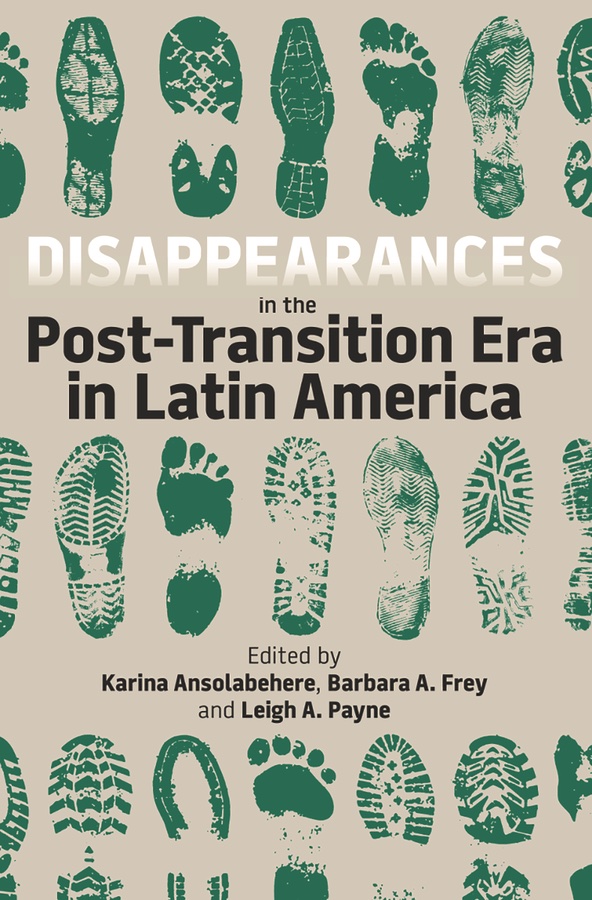
The book identifies a new human rights phenomenon. While disappearances have tended to be associated with authoritarian state and armed conflict periods, the study looks at these acts carried out in procedural democracies where democratic institutions prevail. Specifically, the book manuscript analyses disappearances in four Latin American countries (Mexico, Brazil, Argentina, and El Salvador) which provide insights into the dimensions of this contemporary social problem. The theoretical framing for the volume links contemporary disappearances with certain logics that emerged in the authoritarian and armed conflict periods and continue today. It also covers the evolution of legal instruments addressing past disappearances and the current phenomenon. Each case study is introduced by a personal story of disappearance, followed by analyses. The following ‘Tools’ section sets out ‘best practices’ used by civil society groups and non-governmental organisations to address the rights of victims for truth, justice, reparations, and guarantees of non-repetition.
There is also a Spanish translation of one chapter LÓGICAS DE DESAPARICIÓN: EL CASO DE MÉXICO by Karina Ansolabehere y Leigh A. Payne.
Publications


ODIM is rooted in an international and interinstitutional collaboration. It is anchored at the Instituto de Investigaciones Jurídicas of UNAM and partners with FLACSO-México, the University of Minnesota, and the University of Oxford.
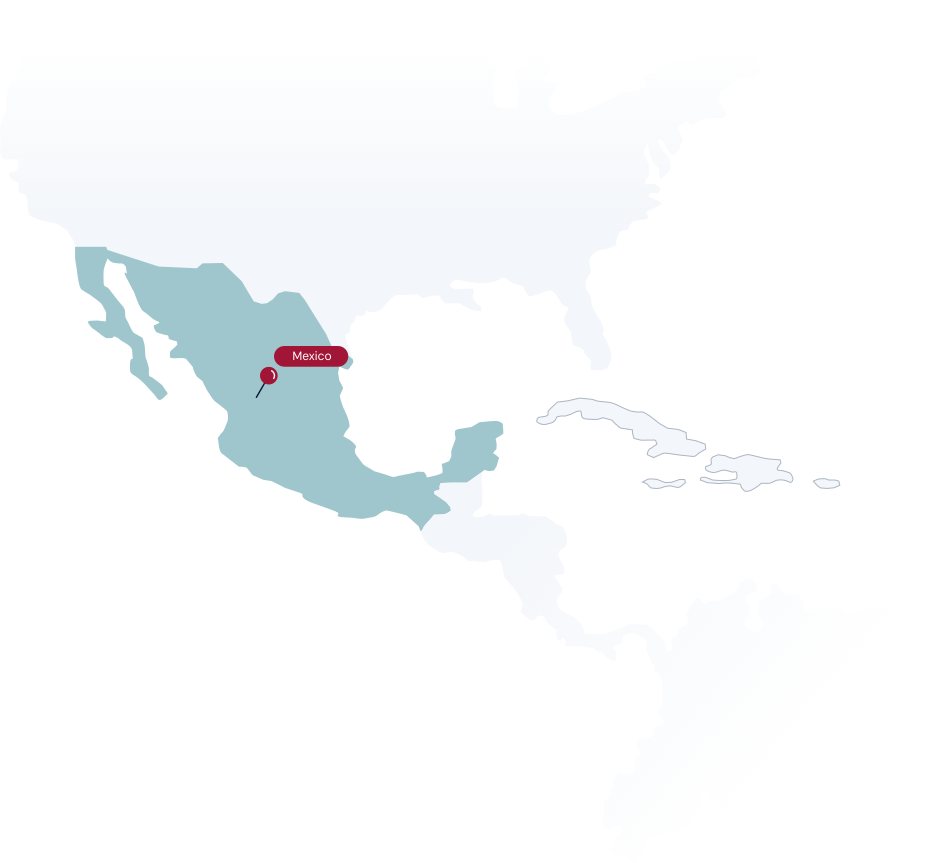
Research and fieldwork are concentrated across various Mexican regions—particularly in zones with some of the highest incidence of disappearances, such as Nuevo León, Coahuila, Tamaulipas, and the Mexico City metropolitan area. These targeted regional studies enable nuanced understanding of local dynamics and institutional responses.











We use only essential cookies that keep this site working properly. We don’t collect or share personal data. You can accept or deny cookies at any time.
Full list of publications by Leigh A. Payne:
Additional Team Publications:


